The Evolution of Responsibility, Care, and Conscious Relationships
Many women carry patterns of responsibility and sacrifice that evolve into martyrdom. Explore how this archetype forms and how expanded states of consciousness can help transform relationships and inner freedom.

It usually begins in a very sincere place. A woman notices what needs to be done and she does it. She senses what someone else is feeling and she holds space for it. She anticipates the logistics of life, the needs of the family, the emotional undercurrents in relationships, the traditions that keep people connected.
At some point she realizes she is holding an enormous amount of the architecture that makes life function.
The schedules.
The conversations that need to happen.
The emotional temperature of the room.
The practical details that keep everything moving.
Often she is very good at it.
And that is part of the reason the pattern becomes so powerful.
In my experience working with people in expanded states of consciousness, I have come to see this pattern through a slightly different lens. What psychology sometimes calls the martyr complex often reflects something deeper and older than a simple behavioral habit.
It reflects an archetype.
And like most archetypes, it once served an important purpose.
The Martyr Archetype
If we step back and look at human history, it becomes easier to see how this pattern developed.
Women have historically held enormous responsibility for the relational continuity of human life. Anthropologists studying kinship systems often note that women maintained the social fabric of communities. They organized family life, preserved traditions, mediated emotional dynamics, and ensured that the needs of children and elders were met.
This required remarkable intelligence.
Relational intelligence.
Emotional awareness.
Strategic coordination.
Endurance.
These are not small capacities.
They are part of what made civilization possible.
But somewhere along the way, these strengths became intertwined with a quiet expectation of sacrifice. The ability to care deeply slowly became associated with the belief that a woman should carry the emotional and logistical weight of life without asking for much in return.
Over generations this expectation solidified into something that many women recognize immediately once it is named.
The feeling that if you do not handle it, it probably will not get handled.
So you step in.
And then you keep stepping in.
Eventually the pattern becomes identity.
The Shadow of Care
The interesting thing about martyrdom is that it rarely begins with resentment.
It begins with love.
It begins with responsibility.
It begins with noticing what needs attention and offering it.
But over time something subtle can happen. The woman who carries everything begins to feel responsible for everything. The one who notices the emotional needs of others may quietly push aside her own. The one who keeps things moving may start to feel like she cannot slow down because too many things depend on her.
In psychology we often talk about this in terms of people pleasing, emotional labor, or hyper-responsibility. These frameworks are extremely helpful because they allow us to see how patterns of behavior form within families and relationships.
But in the deeper regression and consciousness work I facilitate, something else often becomes visible.
Many women are not simply responding to their current circumstances.
They are expressing a deeply ingrained pattern.

The “Too Much” Story
Another pattern I observe in myself and the women I work with is the memory of being told, directly or indirectly, that parts of themselves were too much.
Too emotional.
Too sensitive.
Too expressive.
Too intuitive. Too much for others to handle.
Girls can learn early to regulate themselves by becoming highly capable. They lean into productivity, responsibility, and problem solving while quietly setting aside the softer parts of their emotional landscape.
Over time the nervous system becomes very good at managing life.
But it also becomes very good at staying alert.
Psychology refers to this as hypervigilance, a state where the brain remains in prolonged readiness because it has learned that stability requires constant attention.
External research on trauma and hypervigilance:
https://www.ncbi.nlm.nih.gov/books/NBK207191/
From the outside, this vigilance can look like competence.
Inside, it can feel like a constant hum of responsibility.
What Expanded States Reveal
Where my work differs slightly from traditional psychological approaches is that we also explore these patterns in expanded states of consciousness.
When people enter deeper hypnotic or regression states, they often discover that the roles they have been playing feel older than their current life circumstances. Sometimes the pattern traces back to childhood experiences. Sometimes it reveals generational dynamics carried through family systems.
Occasionally people encounter archetypal themes that appear across lifetimes or ancestral lines.
Whether one interprets these experiences symbolically or literally, they often reveal something profound: the identity of the martyr was not created randomly.
It developed as a way of learning something.
Empathy.
Responsibility.
Care.
From this perspective, martyrdom begins to look less like a flaw and more like an initiation stage in relational intelligence.
But initiation stages are not meant to last forever.
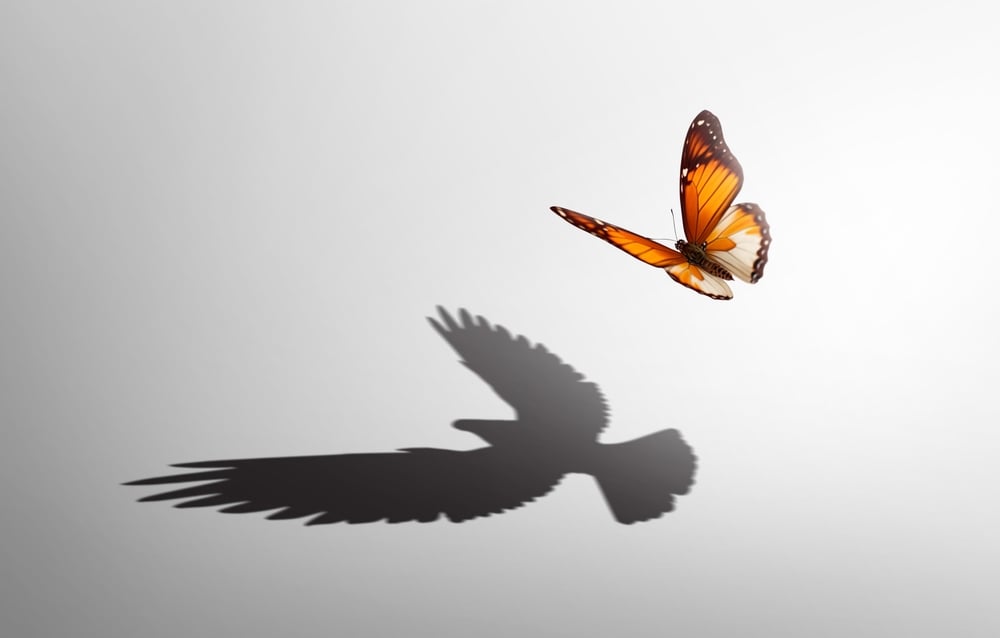
The Moment the Archetype Evolves
What I often see in my work is the moment when the martyr archetype begins to outgrow itself.
A woman reaches a point where the old strategy of carrying everything stops working. The nervous system becomes exhausted. The inner critic becomes louder. Relationships start to feel unbalanced.
At first this can feel like something is going wrong.
But from another perspective, it may be the moment when something is ready to evolve.
When people recognize martyr patterns, the mind often presents two options.
One option is to keep carrying everything and absorb the cost.
The other option is to reject responsibility entirely.
But in my experience, there is almost always a third option.
The Third Option
The third option is reinvention.
It is the moment when we begin living from resonance rather than obligation.
Instead of abandoning the strengths we carry, we refine them. The relational intelligence that once fueled martyrdom becomes conscious leadership within our relationships. Responsibility becomes something we choose rather than something we silently inherit.
Support becomes possible.
Rest becomes possible.
And something unexpected happens.
The very qualities that once created exhaustion begin expressing themselves in healthier ways. Empathy becomes connection rather than sacrifice. Responsibility becomes collaboration rather than burden.
This is not about doing less.
It is about doing things differently.
The Opportunity
One of the reasons I enjoy having these conversations with women is that the moment the pattern becomes visible, it often stops feeling so heavy.
It becomes something we can work with.
Something we can evolve.
The extraordinary relational intelligence women bring into the world does not disappear when martyrdom dissolves. If anything, it becomes more powerful when it is expressed consciously rather than automatically.
What I have seen repeatedly in my work is that when women begin exploring the subconscious architecture of their relational roles, something shifts. The nervous system softens. Boundaries become clearer. Relationships begin reorganizing around more balanced participation.
The remarkable thing is that this shift does not require rejecting care or responsibility.
It simply asks that we include ourselves in the circle of care we extend to everyone else.
And when that happens, the role of the martyr quietly transforms into something else entirely.
Not sacrifice.
But conscious stewardship of the life we are creating.

The Return of Healthy Masculine Partnership
Another part of this evolution involves the restoration of balance between masculine and feminine dynamics within relationships.
In healthy relational systems, masculine and feminine qualities were never meant to compete with one another. They were meant to complement each other.
Healthy masculine energy brings structure, stability, direction, and protection. It creates containers where life can unfold safely. Healthy feminine energy brings relational intelligence, emotional awareness, creativity, and the ability to sense the deeper rhythms of life.
When these qualities are balanced, neither partner needs to carry the entire system.
Responsibility becomes shared.
Leadership becomes collaborative.
And the extraordinary capacities women bring to relationships are met with equal participation rather than silent expectation.
This balance allows both men and women to evolve beyond outdated roles and into partnerships that reflect a more conscious stage of human development.
The Opportunity in Front of Us
One of the reasons I enjoy having these conversations with women around shifting old outdated internal infrastructure is that the moment the pattern becomes visible, it has the opportunity to release, making way for something nimbler and more retrofitted to the modern human experience.
It becomes something we can create with intention and openness.
Something we can evolve in a customized way.
The complex and dynamic intelligence women bring into the world does not disappear when martyrdom transforms and evolves. If anything, it becomes even more powerful when expressed consciously rather than automatically. It elevates. The nerves system softens. Boundaries become clearer. Relationships begin reorganizing around more balanced participation.
The remarkable thing is that this shift does not require rejecting care or responsibility.
It simply asks that we include ourselves in the circle of care we extend to everyone else.
And when that happens, the role of the martyr transforms into something else entirely.
Not sacrifice.
But conscious stewardship of the life we are creating.
If This Resonates
If you recognize yourself in some of these patterns, you are far from alone.
Many thoughtful, capable women find themselves at this exact turning point — where the strategies that once helped life function are now asking to evolve into something more conscious and sustainable.
One way to explore this shift is through deeper subconscious and expanded-state work, where we can examine the internal architecture behind these roles and begin reconfiguring them from the inside out.
If you feel curious about exploring this kind of work together, you are welcome to schedule a discovery conversation here:
Sometimes the most powerful transformation begins with a simple willingness to look at our lives from a slightly different level of awareness.
With love,
Nora